
The Core Difference
The fundamental distinction lies in beam angle and adjustability.
Downlights cast a fixed, relatively wide beam straight down. They're designed to provide general illumination across a broad area. The fixture points permanently downward, spreading light evenly below without favouring any particular spot.
Spotlights cast a narrower, more focused beam that can typically be aimed. They're designed to highlight specific objects, areas, or architectural features. The fixture adjusts to direct light precisely where you want it.
Think of downlights as floodlights for your ceiling. Think of spotlights as torches you can point at whatever deserves attention.
Beam Angles Explained
Beam angle determines how light spreads from the fixture.
Downlights typically feature beam angles of 60 degrees or wider. This broad spread covers large floor areas efficiently, with light from adjacent fixtures overlapping to create even illumination without dark spots between pools.
Spotlights typically feature beam angles of 40 degrees or narrower. Some focus as tightly as 10 to 15 degrees, creating concentrated beams that dramatically highlight whatever they target while leaving surrounding areas comparatively dark.
Medium angles around 40 to 60 degrees blur the distinction. Fixtures in this range can serve either purpose depending on spacing and application.
The practical effect is significant. A room full of wide-beam downlights feels evenly lit throughout. The same room with narrow-beam spotlights feels dramatically lit in some areas and dim in others.
Fixed vs Adjustable
Most downlights are fixed, pointing straight down permanently. This suits their purpose of general illumination where even coverage matters more than directed focus.
Most spotlights offer adjustment, either tilting on a gimbal mount within a recessed housing or rotating along a track system. This adjustability lets you direct light at artwork, architectural features, or functional zones as needed.
Some fixtures blur this line. Adjustable downlights combine wider beam angles with gimbal mounts. Fixed spotlights lock into position after initial aiming. The terminology becomes imprecise at the margins.
When shopping, check both beam angle and adjustability rather than relying on product names alone.
When to Use Downlights
Downlights excel at providing ambient illumination across general living spaces.
Hallways and corridors need even lighting for safe navigation without dramatic highlighting. Downlights spaced regularly along the ceiling provide exactly this.
Kitchens benefit from downlight ambient lighting supplemented by task lighting over work surfaces. The downlights provide overall brightness while pendants or under-cabinet lights handle focused work illumination.
Bathrooms use downlights effectively for general illumination, with separate vanity lighting addressing grooming needs.
Living rooms and bedrooms often use downlights as one layer in a comprehensive lighting scheme. They provide base illumination that lamps, pendants, and accent lighting supplement.
Open plan spaces rely on downlights to maintain consistent ambient light levels across large areas where multiple activities occur simultaneously.
The common thread is general illumination without specific focal points. Downlights answer the question "how do I light this whole room adequately?" rather than "how do I highlight this particular thing?"
When to Use Spotlights
Spotlights excel at drawing attention to specific elements.
Artwork demands spotlight treatment. The focused beam illuminates the piece while leaving surrounding wall areas darker, creating the contrast that makes art stand out. Adjustability lets you reposition light as your collection changes.
Architectural features like textured walls, exposed beams, or alcoves benefit from directed light that reveals their character. Spotlights graze surfaces to emphasise texture or wash features to make them glow.
Retail displays use spotlights extensively because focused light draws customer attention. The same principle applies at home for showcasing collections, sculptures, or prized possessions.
Kitchen islands and breakfast bars sometimes use track-mounted spotlights as an alternative to pendants. The adjustable beams can be aimed precisely at work surfaces.
Reading areas benefit from adjustable spotlights that direct light onto book or screen without illuminating the entire room.
The common thread is intentional focus. Spotlights answer the question "how do I make this specific thing look its best?" rather than "how do I light the general space?"
Combining Both
Most well-lit rooms use both types together.
Downlights provide the ambient base layer. They ensure the space is adequately lit for general activities, navigation, and safety. This layer often operates on a dimmer to adjust intensity throughout the day.
Spotlights provide accent highlights. They draw attention to features you want to emphasise, adding visual interest and focal points that make spaces feel designed rather than simply illuminated.
The combination creates depth. Evenly lit rooms feel flat. Spaces with varied light levels, brighter spots drawing the eye while other areas recede, feel dimensional and interesting.
Consider a living room with recessed downlights providing overall brightness, track spotlights highlighting artwork on one wall, and table lamps adding warm pools at seating areas. Each layer serves a purpose, and together they create an atmosphere neither could achieve alone.
Recessed vs Surface vs Track
Both spotlights and downlights come in various mounting configurations.
Recessed mounting hides the fixture body within the ceiling, leaving only a trim ring visible. This creates clean, minimal appearance but requires ceiling cavity depth for installation. Both downlights and spotlights work in recessed housings.
Surface mounting attaches fixtures directly to the ceiling face. The fixture body remains visible, which can be a design feature or a necessary compromise where recessed installation isn't possible.
Track systems mount multiple adjustable fixtures along a powered rail. Tracks work particularly well for spotlights where you want flexibility to add, remove, or reposition fixtures over time. They suit galleries, retail spaces, and homes where displayed items change frequently.
The mounting choice affects both appearance and flexibility. Recessed looks cleanest but locks fixture positions. Track looks more industrial but offers maximum adjustability.
Practical Selection Guide
Several questions help clarify which type suits your needs.
What are you trying to achieve? General room illumination suggests downlights. Highlighting specific features suggests spotlights.
Do you need adjustability? Fixed installations where light targets won't change suit downlights. Spaces where you might rearrange art or furniture benefit from adjustable spotlights.
What's your ceiling situation? Deep ceiling cavities accommodate either type recessed. Shallow cavities or solid ceilings may require surface mounting or track systems.
Are you layering light? Most residential spaces benefit from both downlight ambient layers and spotlight accent layers working together.
What beam angle serves your purpose? Wide angles above 60 degrees for general illumination. Narrow angles below 40 degrees for focused highlighting. Medium angles for flexible general-purpose use.
Common Mistakes
Several errors appear repeatedly in lighting installations.
Using spotlights as sole illumination leaves rooms with dramatic pools of light and dark voids between them. Most spaces need ambient light that spotlights can't provide efficiently.
Spacing downlights too widely creates scalloped light patterns with dark spots between fixtures. Proper spacing based on beam angle ensures even coverage.
Choosing overly narrow beam angles for general illumination wastes fixtures and electricity achieving coverage that wider beams would provide more efficiently.
Neglecting adjustability in spaces where focal points may change. Installing fixed spotlights aimed at artwork you might later move creates future frustration.
Mixing colour temperatures between downlights and spotlights creates jarring visual conflict. Maintain consistent colour temperature across fixture types.
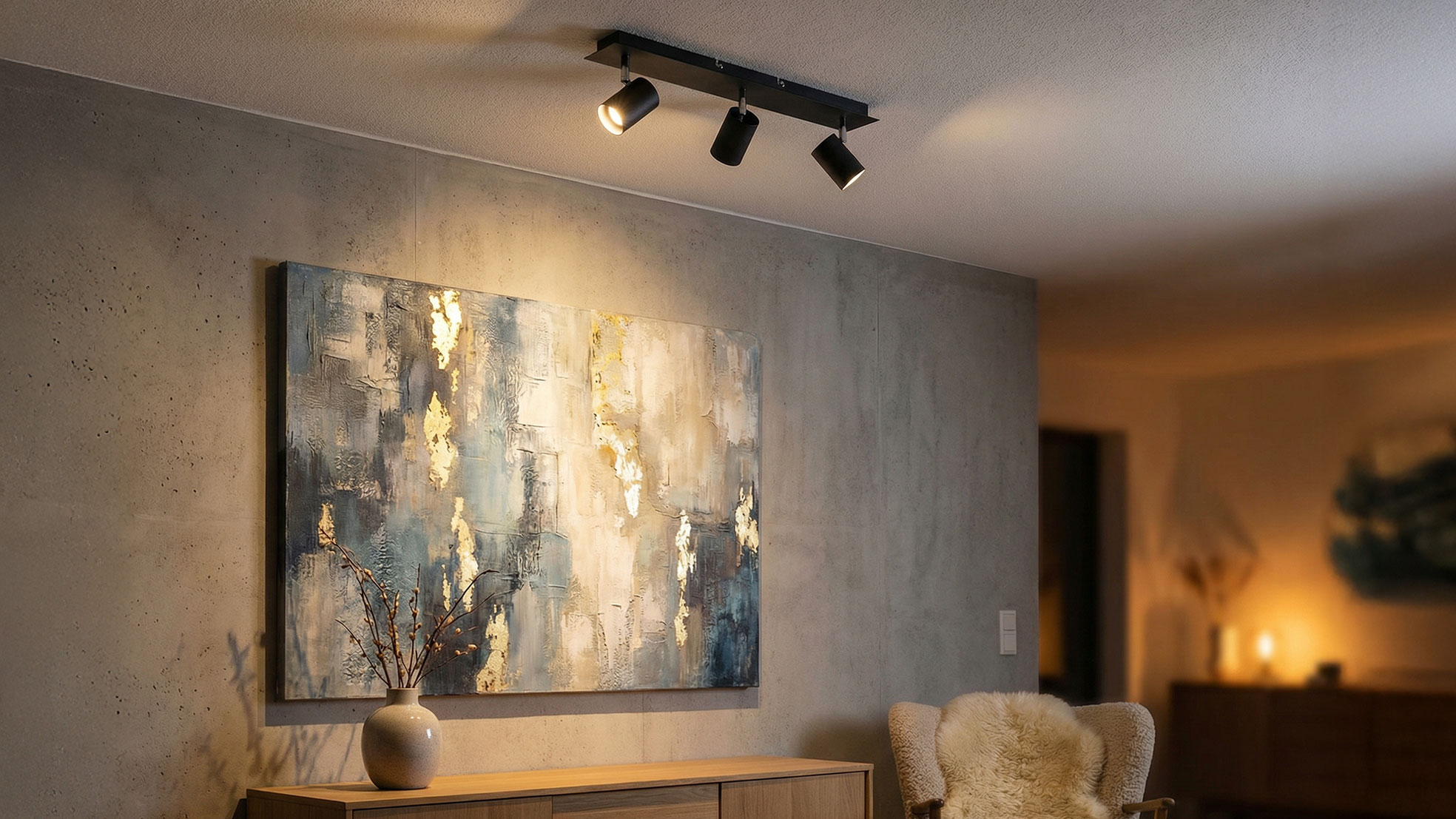
Spotlights and downlights serve different but complementary purposes. Downlights provide the even ambient illumination that makes spaces usable. Spotlights provide the focused accent lighting that makes spaces interesting.
Understanding the distinction between beam angles and adjustability clarifies which type suits each application. Most rooms benefit from both working together, with downlights creating a base layer and spotlights adding highlights.
Consider your specific goals for each space. What needs general illumination? What deserves focused attention? Let these questions guide your selection, and your lighting will serve your space beautifully.


