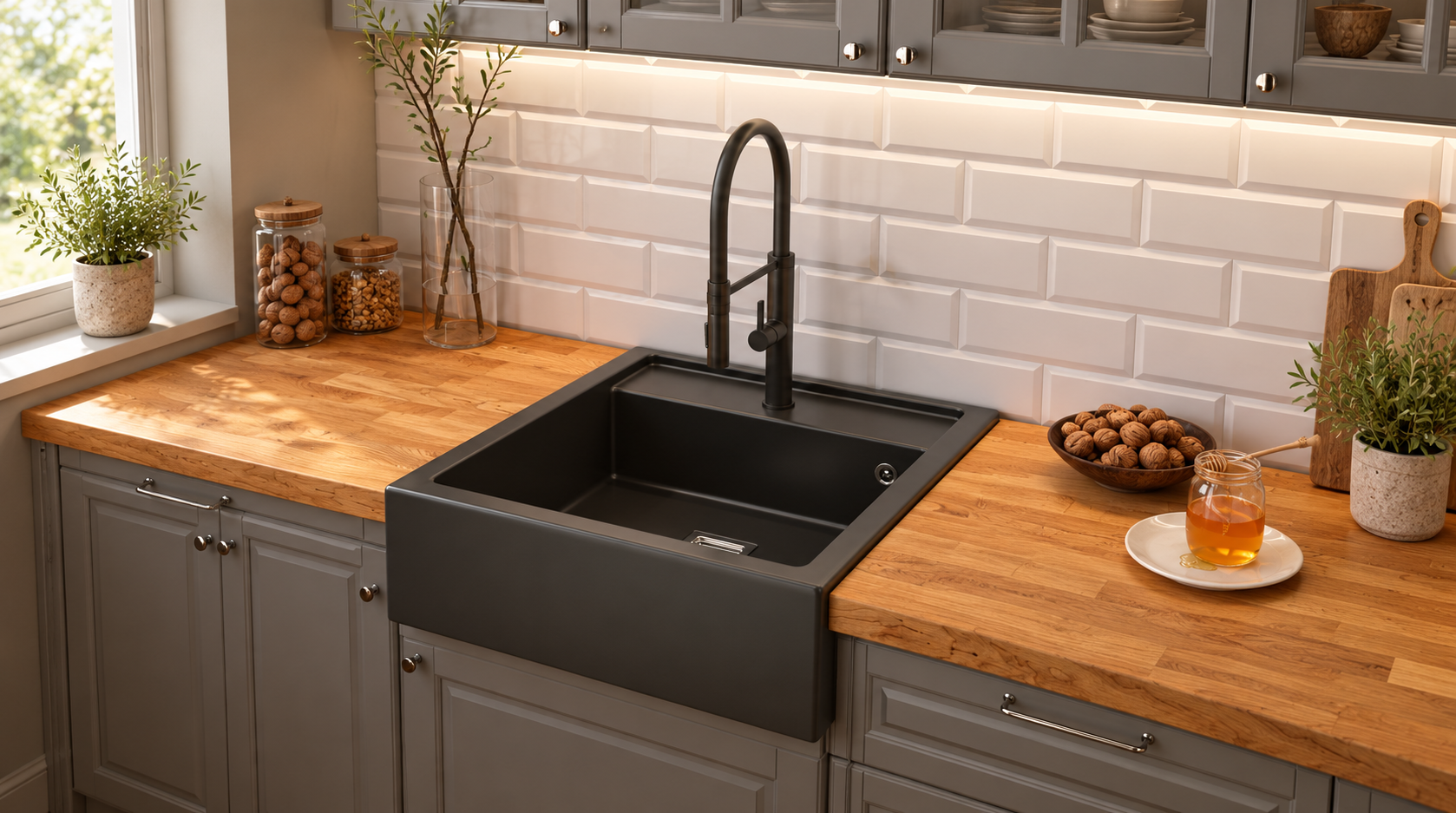
Three materials look similar in a showroom photo but behave very differently in daily use: weight, chip resistance, and how much upkeep each one actually needs. Knowing which trade-off fits your kitchen matters more than which one photographs best.
The exposed apron front, deep basin, and traditional silhouette make a farmhouse sink an instant focal point in a kitchen. Whether you're drawn to white ceramic, a granite composite, or matte black stainless steel, choosing the right one means matching material, size, and finish to how the kitchen actually gets used, not just how it looks in a photo.
A white ceramic apron sink suits a traditional country kitchen as readily as a sleek contemporary one. A granite composite sink brings color range and a softer, matte surface to more contemporary schemes. Stainless steel brings a cleaner, more industrial edge. Understanding how each material, finish, and configuration performs helps you pick a sink that feels intentional rather than trend-led.
What Makes Farmhouse Sinks Different
The farmhouse sink originated in European country homes, where a large, deep basin handled everything from washing vegetables to filling water buckets. The exposed front panel, or apron, eliminated the cabinet face, letting people stand closer to the basin without leaning over a countertop edge. That practical origin is still what gives the style its distinctive look.
The exposed apron also gives you a large surface to introduce texture, color, or material contrast, which is a bigger design lever than a standard sink under-mounted flush with the counter offers.
Farmhouse sinks typically span 24 to 36 inches (61-91cm) wide, with basin depths of 9 to 10 inches (23-25cm) compared to 7 to 8 inches (18-20cm) on a standard kitchen sink. That extra depth is what actually matters day to day: it's the difference between a sheet pan fitting flat in the basin or needing to be washed at an angle.
Choosing Materials That Match Your Kitchen Style
Ceramic
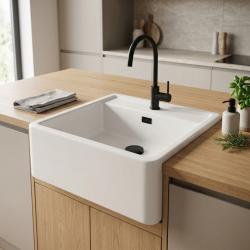
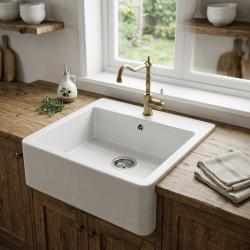
Ceramic farmhouse sinks are molded and glazed, then fired at extreme temperatures, producing a smooth, glossy surface that resists scratches, stains, and heat damage. White remains the most common choice, working as a clean backdrop against dark cabinetry or light wood alike, though ceramic is also available in other glaze colors.
The non-porous glaze means water beads rather than soaking in, and the material resists staining from coffee, wine, or tomato-based cooking. The trade-off is weight: a 30-inch ceramic sink typically weighs 25-45kg, which means the base cabinet needs reinforced support structure underneath. Professional installation usually costs more than a standard drop-in sink because of that reinforcement, and a hard, sharp impact can chip the glaze, exposing the ceramic body underneath.

Granite Composite
Granite composite sinks blend crushed granite stone with acrylic or resin binders, giving a dense, durable surface available in a wider color range than ceramic, typically spanning black, graphite, and warmer stone tones. The matte, slightly textured finish hides water spots and fingerprints noticeably better than a polished stainless steel surface.
Granite composite resists scratches and moderate heat well, and the non-porous surface resists staining from most kitchen use. It weighs more than stainless steel but generally less than ceramic, placing moderate demand on cabinet structure, roughly 15-25kg for a standard 30-inch sink. It's a practical middle ground for anyone who wants color and a low-maintenance matte surface without ceramic's full weight or stainless steel's more visible water spotting.


Stainless Steel
Stainless steel apron sinks bring a cleaner, more contemporary line to the farmhouse silhouette. Current finish options go well beyond plain brushed steel: matte black and gunmetal PVD-coated finishes create stronger contrast against light cabinetry, and many manufacturers now apply PVD coating specifically because it protects the surface against scratching more effectively than a standard brushed or polished finish.
Stainless steel weighs considerably less than ceramic or granite composite, typically 8-15kg for a standard 30-inch sink, reducing the cabinet reinforcement needed. It handles heat well and resists bacterial growth on its own. The trade-off is visibility of water spots and fingerprints, more noticeable here than on the other two materials, so a brushed or matte/PVD finish hides daily marks considerably better than a polished one.
Ceramic vs. Granite vs. Stainless Steel: Quick Comparison
|
Ceramic |
Granite composite |
Stainless steel |
|
|
Weight (30-inch sink) |
25-45kg |
15-25kg |
8-15kg |
|
Cabinet reinforcement |
Required |
Often recommended |
Usually not required |
|
Water spot visibility |
Low |
Low |
Higher, especially polished |
|
Scratch resistance |
High (glaze can chip on impact) |
High |
High, especially PVD-coated |
|
Color range |
Mostly white, some glazed colors |
Wide (black, graphite, stone tones) |
Steel, matte black, gunmetal via PVD |
|
Sound |
Quiet |
Quiet |
Can ring unless well-insulated |
|
Best fit |
Traditional, classic kitchens |
Contemporary, color-flexible schemes |
Contemporary, industrial-leaning kitchens |
Single Bowl vs. Double Bowl
A single, extra-deep basin handles large cookware and wash tubs and creates the strongest visual statement, since the uninterrupted expanse reads cleanest in a minimalist kitchen. For anyone who regularly washes oversized pots or sheet pans, single bowl offers more real flexibility than a divided basin.
A double bowl splits the basin into two smaller sections, which suits households that like separating tasks (soaking on one side, rinsing on the other) but reduces the maximum size either side can hold, and the center divider can get in the way of washing something large. Most farmhouse sink buyers choose single bowl specifically because the generous, undivided size is one of the style's core advantages.
Style-Specific Pairings
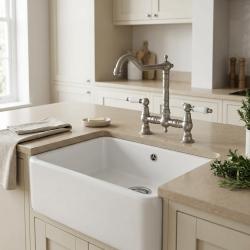
Traditional kitchens: White ceramic anchors the look well, paired with a bridge or two-handle mixer in polished chrome or brushed nickel. Shaker cabinets in soft white or gray, a butcher block counter, and classic subway tile keep the whole scheme cohesive without overwhelming it.
Farmhouse-contemporary hybrid: A dark granite composite or matte black stainless steel sink creates a strong focal point against white cabinetry. An industrial-style faucet with commercial proportions suits the look, and brushed gold or brass against a dark sink is a particularly striking combination. Quartz counters with subtle veining balance the traditional silhouette with more current materials.
Contemporary kitchens: Brushed stainless steel or a flush-mounted ceramic sink creates architectural interest without leaning into country styling. Undermount or flush-mount installation minimizes the visible rim. Pair with a sleek, geometric faucet and flat-panel cabinetry with minimal hardware.
Color-led kitchens: Granite composite's wider color range, stone grays, graphite, deep tones, lets the sink coordinate with cabinetry or countertop color in a way ceramic and steel can't match as directly.
Coordinating Finishes
An apron-front sink interacts visibly with more of the kitchen than a standard undermount sink does, simply because more of it is exposed. Pick one dominant metal finish for the kitchen's hardware and faucet, then use a second finish sparingly as an accent; contrast reads as more intentional than an exact match everywhere. A white ceramic sink gains visual weight against dark cabinetry; a dark granite composite or matte black steel sink does the same against white.
Consider how the sink's surface interacts with the room's light: ceramic's glossy glaze reflects light differently than granite composite's matte texture or stainless steel's brushed finish, which changes how much visual weight the sink carries in the room.
Sizing guide:
- 24-27 inches (61-69cm): smaller kitchens
- 30 inches (76cm): the most common size, fits most standard cabinet runs
- 33-36 inches (84-91cm): larger kitchens with room for a bigger cabinet base
Installation Types
Undermount gives the cleanest, most contemporary look, with only the apron front exposed below the counter edge. It pairs well with stone countertops.
Top-mount creates a more traditional, accessible look and suits a classic farmhouse kitchen.
Flush-mount gives the most seamless, minimal transition between counter and basin, suited to a contemporary kitchen.
A farmhouse sink centered under a window is a common and effective placement, since the exposed apron frames the window visually while keeping the workspace comfortable. Open shelving nearby tends to reinforce the practical, accessible character the style is known for.
Caring for Each Material
- Ceramic: gentle, non-abrasive cleaning; rinse and wipe with a soft cloth to prevent water spots; avoid dropping heavy cast iron cookware directly onto the surface, since the glaze can chip on impact.
- Granite composite: wipe with warm water and mild soap; the textured matte surface resists staining but benefits from drying after use in hard water areas to prevent mineral buildup in the texture.
- Stainless steel: clean with the grain direction; regular buffing keeps the finish even, and a matte or PVD-coated surface hides daily marks better than a polished one.
Making Your Choice
Start from the kitchen's overall style, then choose the material and finish that supports it, factoring in realistic maintenance expectations rather than an idealized routine. Budget for both the sink and installation, since cabinet reinforcement for ceramic typically adds to installation cost compared to a lighter granite composite or stainless steel sink.
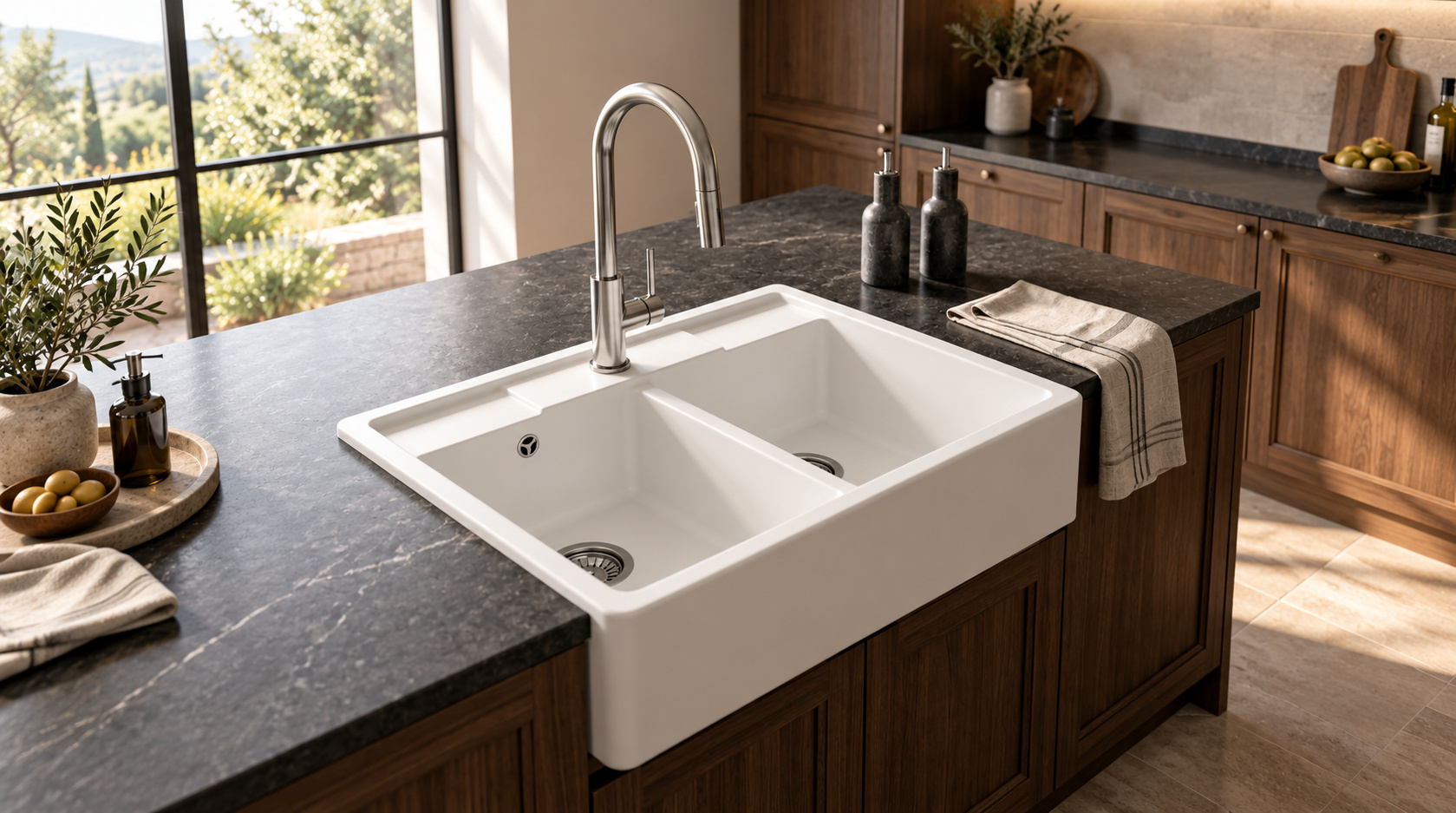
Ceramic gives the most traditional look but needs reinforced cabinetry; granite composite offers color range with a forgiving matte surface at a lighter weight; stainless steel is the lightest option and easiest to fit into an existing cabinet, at the cost of more visible water spots unless you choose a matte or PVD finish. Choose based on the maintenance routine you'll actually keep up with, not just which finish photographs best.
FAQ
How much does a farmhouse sink weigh, and does it need special cabinet support?
A ceramic sink typically weighs 25-45kg for a standard 30-inch size and usually needs reinforced cabinet support. Granite composite is lighter, generally 15-25kg, and stainless steel is the lightest at 8-15kg, placing the least demand on cabinet structure.
What's the difference between undermount, top-mount, and flush-mount installation?
Undermount hides the mounting edge below the counter for a clean look and pairs well with stone counters. Top-mount sits above the counter edge for a more traditional, accessible feel. Flush-mount creates a nearly seamless transition between counter and basin, suited to contemporary kitchens.
Is a single bowl or double bowl farmhouse sink better?
Single bowl offers more usable space for large cookware and creates a stronger visual statement, which is why it's the more common choice for the style. Double bowl suits households that prefer separating tasks, at the cost of reduced space per side.
Which farmhouse sink material shows water spots the most?
Stainless steel, particularly polished finishes, shows water spots and fingerprints more visibly than ceramic or granite composite. A brushed or matte/PVD stainless finish hides daily marks considerably better than a polished one.
Can a ceramic sink chip?
Yes, a hard, sharp impact, like a dropped cast iron pan, can chip the glaze and expose the ceramic body underneath. Gentle daily use rarely causes issues, but heavy cookware should be lowered carefully rather than dropped into the basin.
What size farmhouse sink fits a standard kitchen?
30 inches (76cm) is the most common size and fits most standard cabinet runs. Smaller kitchens often use 24-27 inch (61-69cm) sizes; larger kitchens can accommodate 33-36 inch (84-91cm) sinks.
Can a farmhouse sink go in a contemporary kitchen, or is it only for traditional styles?
It works in both. Brushed stainless steel or a flush-mounted ceramic sink with minimal hardware and a geometric faucet reads as contemporary, while a white ceramic sink with a bridge faucet reads as traditional. Granite composite in a dark or stone tone also suits a contemporary color-led scheme well.
Does granite composite need any special care?
Not really; warm water and mild soap handle daily cleaning. In hard water areas, drying the surface after use helps prevent mineral buildup from settling into the slightly textured finish.


